



They’ve become the trademark—or perhaps the addiction—of our generation. They’re the ultimate procrastination enabler and homework diverter. Our fingers itch to check them the second a web browser opens. Facebook and other social media sites steal countless minutes of our days and offer little in return.
Rather than wallow in the guilt of hours spent shamelessly lurking your ex-whatever, why not use your lurking, browsing and posting skills to build a framework for achieving your career goals. Use your social networks to do just that—network.
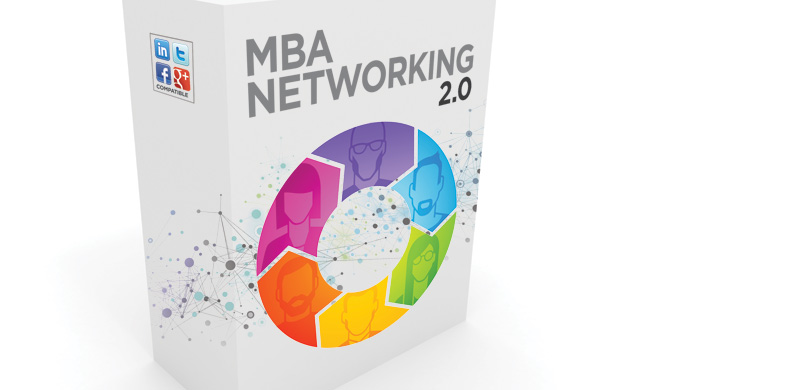
LinkedIn, Twitter, Google+, and yes, even Facebook, have taken off as go-to platforms for professionals. People meet and connect online with the intent to advance their careers, and maybe even help others along the way. It’s networking 2.0.
When LinkedIn first took off, many of us “Millennials” were skeptical. “It’s social media for middle-agers,” some would say, or, “It’s just a lame version of Facebook.” Evidently, a forward-looking few saw LinkedIn as more than a fad, as today over 225 million people of all generations across the globe are connected on this career-oriented network.
To be effective with social networking tools, it’s essential to invest some time into your online presence. It’s about more than simply existing online; it’s about cultivating a personal brand.
“People are going to Google you for one reason or another. The more you use [LinkedIn], the more likely you are to show up at the top of search rankings: that means that you have a degree of control over what others first see about you,” says Lisa Dalla Vecchia, manager of alumni and career communications at Simon Fraser University’s Beedie School of Business.
For René Beaulieu, career advisor and employment counsellor at Laval University, you can’t initiate strong online networking until you can identify your specific purpose for being on the platform. “I tell students to think of themselves as a company,” he says. By doing so, you can clearly articulate your unique offering and determine what to share. For example, while you may be an expert photographer, it’s probably not a good idea to write about photography in your objective statement if you’re trying to sell your management skills.
But perfecting your profile alone won’t earn you connections. The next step, Beaulieu says, is cultivating your presence. He recommends spending five to 10 minutes on LinkedIn each day.
“Students are often very occupied with studying and socializing. They don’t put that much time into developing their business proposition,” he warns.
While it may be an old cliché, there’s definite merit to the idea that your network is your net worth. Your MBA gets its value from the experiences you gain along the way. Networking may be equally as valuable as the degree itself.
With quick intervals of online activity, it’s easy to stay up-to-date with interesting industry updates that your contacts are sharing, and to open conversations with new contacts.
Ten years ago when sites like LinkedIn were in their infancy, networking might have meant endless schmoozing at various network events, exchanging business cards by the dozen, and constant effort to keep up with the connections you’ve made along the way. Your network consisted of people you chanced upon, and the degrees of separation between you and your desired connections weren’t always apparent.
Today, if you’re looking to break into an industry or gain connections at a company, a simple Google search will give you incredible background information and uncover relevant people in your industry that you should meet. It’s a good place to start networking online.
While the good old-fashioned acts of looking someone in the eye, shaking their hand and starting a conversation will never become obsolete, online networking can complement in-person contact and make it easier to stay in touch. It can also take the awkwardness out of first contact.
One of the main benefits of LinkedIn is that it enables conversation. “It makes it easier to find people, understand who the person is, what their background is, and why you might want to talk to them,” says Fiona Macfarlane, MBA mentoring program manager at McGill’s Desautels Faculty of Management.
LinkedIn’s clever design not only illustrates how you’re connected to someone, through friends or friends-of-friends, but also shows what you have in common with a desired connection. These commonalities go a long way toward opening conversation, and demand a lot less room-working and business cards than analog networking.
When developing your online network, it’s important to practise the “netiquette” of connecting. The generic LinkedIn invitation is often perceived as stale, or even cavalier. Incorporate your common ground into an invitation: maybe you attended the same event or share an alma mater, and can suggest getting together to talk about old times. With the endless amount of information available online, you’re sure to find material for an opening line.
LinkedIn isn’t the only way to get a hold of your desired contacts. Twitter constantly presents casual opportunities to join conversations that are already occurring—as long as you can contribute in fewer than 140 characters.
“Through Twitter I’ve met a lot of great people,” says Dalla Vecchia. She recommends using the tool to scout out people before networking events. Use the event’s hashtag to find out who’s going and whom you could meet, and become a prominent part of the conversation before you even enter the building.
Twitter’s fast-paced nature means there is hardly such a thing as being too active. When used strategically, it’s an indispensable tool for establishing your leadership online. Experts recommend tweeting about professional topics 80 percent of the time, and using the other 20 percent for personal input.
On LinkedIn, most of your efforts should be put into tracking conversation and maintaining an up-to-date profile. Dalla Vecchia warns that your contacts may see constant posts as spam. She suggests sharing information once a week. Try posting industry news to show that you’re keeping up with what is happening in your field.
With every connection you make, keep your ultimate networking objectives in mind and act within them. “It’s not a race for the number of contacts, it’s about getting in touch with great people who are actually going to help you get further,” says Beaulieu. It’s about staying in touch too, experts agree.
The next time you’re delaying whatever daunting task awaits, instead of refreshing your page every few minutes to see what photos your friends uploaded, think about how you could use your time to get ahead.